I find the idea of monastic life fascinating. I even daydreamed about joining an Episcopalian convent in Tennessee—at least until I read the words “vow of poverty.” As a nun, I wouldn’t have been able to impulsively buy books on a trip to CA. So instead, while in CA last month, I impulsively bought a book about a nun.
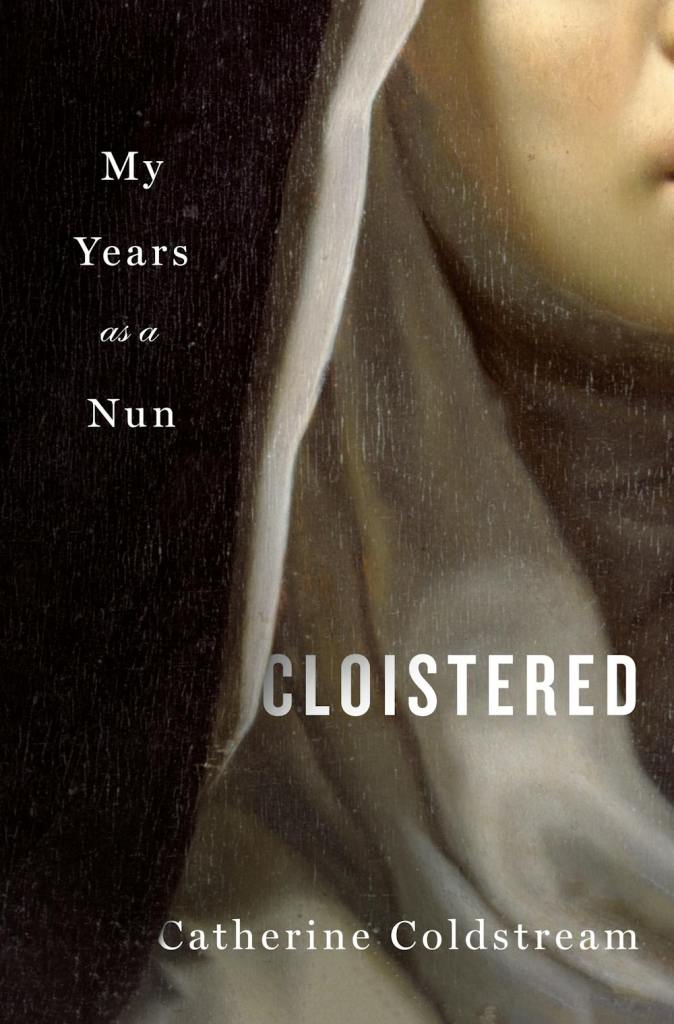
Cloistered: My Years as a Nun by Catherine Coldstream
After the shock of her father’s death, and with the rest of her family scattered, Catherine was left grieving and alone at twenty-four. A search for meaning led her to the nuns of Akenside Priory.
Here she found a tight-knit community of dedicated women and peace in an ancient way of life. But as she surrenders to her final vows, all is not as it seems behind the Priory’s closed doors.
In Cloistered: My Years as a Nun, Catherine Coldstream takes the reader deep into monastic living and examines the core difficulty faced by any religious community: that of separating God from humans. I struggled with the same issue at Wheaton College. How do we understand God when dealing with the inevitable (and sometimes extreme) fallibility of the humans who follow God?
While reading about Coldstream’s ten years as a Carmelite nun, I was struck by the way the passage of time was marked according to the Divine Office: Lauds (morning prayer), Matins (reading church writings), Vespers (evening prayer), and Compline (night prayer). The seasons were also marked by the liturgical calendar: Advent, Lent, and Ordinary Time, to name a few.
The transition into fall is always an interesting season for me because August is the anniversary of a severe mental health crisis that landed me in a hospital before my junior year at Wheaton. This year marks 18 years that I might not have lived. It’s crazy to think about how, within one lifetime, there can be a season that dark and also a season as light as the one I’m enjoying right now.
In Cloistered, Coldstream documents the changing seasons of leadership and the resultant power dynamics and individual struggles for control that plagued the community. What began as a light season, slowly turned to darkness for her and several of the younger nuns who experienced severe mental health crises.
Maybe part of the separation between God and God’s people lays in acknowledging that humans and their religious environments cannot control the seasons. We can mitigate them: running the AC in the summer, utilizing medication or therapy in a dark season, reaching out to family or friends in a lonely season, etc. But we cannot force our way through darkness or make lightness last. Our communities cannot control change and God cannot be used for control. Even Costco can’t control seasons—they may have started selling Christmas trees in August, but they couldn’t break the crazy heat wave we had this summer in Tennessee.
My fall writing goal is to do another edit on my memoir, which will be my ninth draft in ten years, but to do so will require spending time in that dark season from 18 years ago while living in a light season now. How do we honor our dark seasons without fear or the impulse to erase what we regret? How do we enjoy current seasons knowing they may not last? How do we love each other well when some of us are in light seasons and some are in dark seasons? How do we let the seasons change for others, even when that causes us to deal with change ourselves?
I think there’s something to be said for witnessing each other’s seasons: reading books, hearing stories, and spending time with people. Something to be said for the mindfulness to be in the season you’re in (looking at you, Costco). And something to be said for grounding into the things that don’t change, like God, or love, or human hope (though myself 18 years ago would have rolled my eyes at that cliché, and I give you permission to roll your eyes as well if you like).
I’m grateful for this season (and for air conditioning). A dark season may come in which I will look back and roll my eyes at this blog post, but I cannot prevent or predict that season. In the meantime, I’m probably going to buy the 4.5’ Whimsical Tree Pre-Lit with LED Lights (it’s so cute!) because we all know I’m only human and some things simply can’t be controlled.

