We are finally thawing out here in Tennessee! To all the wonderful people who reached out asking if I survived the ice storm, I can confirm now that, yes, this Californian will live. Whiled iced-in, I tried to read about joy, but was simply not feeling joyful. Instead, I watched Murder, She Wrote for glimpses of Mendocino and sunshine. But, this is a blog about books, not sappy-80s-murder-mystery tv, so I guess we’ll talk about joy.
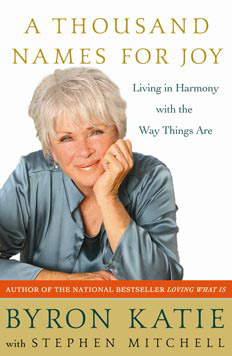
A Thousand Names for Joy by Byron Katie with Stephen Mitchell
In her first two books, Loving What Is and I Need Your Love—Is That True? Byron Katie showed how suffering can be ended by questioning the stressful thoughts that create it. Now, in A Thousand Names for Joy, she encourages us to discover the freedom that lives on the other side of inquiry.
To be honest, I only got about half way through this book and that wasn’t just because I was really cold most of the month of January. A Thousand Names for Joy felt a bit too abstract for me. I liked Loving What Is much better because it is full of transcripts of Katie talking to workshop participants and walking them through what she calls The Work.
The Work is a self-inquiry process using four questions: 1) Is it true? 2) Can you absolutely know that it’s true? 3) How do you react when you believe that thought? 4)Who would you be without that thought?
You’re supposed to write down your feelings and thoughts about a situation or person, apply the questions to each statement, and then follow it up with what she calls “turn-arounds.”
So for example: Snow is terrible and should not exist.
Is it true? No.
(I get to skip the second question in this case, but it’s intended to make you think of any reason, any at all, that might make your statement untrue if you answered “yes” to the first question.)
How does the thought make me feel? Grumpy. Impatient. Like I couldn’t possibly get up and do something productive in the midst of something so terrible.
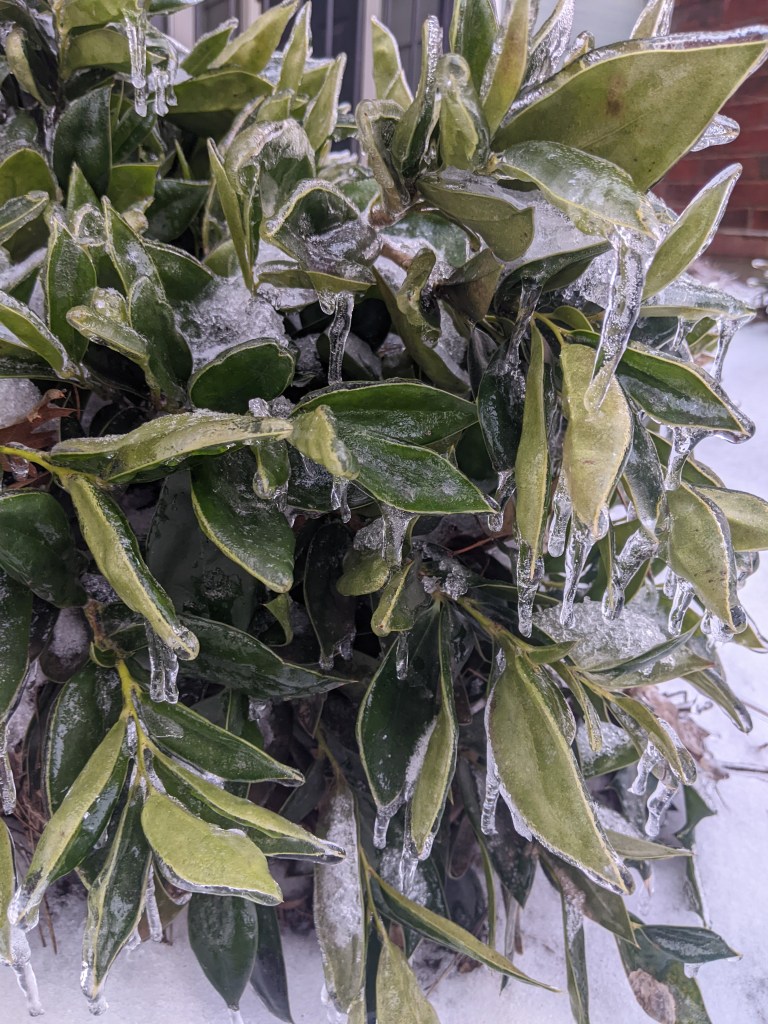
Who would I be without that thought? Able to enjoy snuggly days inside. Appreciative of the beautiful icicles (photos below). Happy that I got an extra day off from folding swimsuits while telling members that we sold out of winter coats in October. (Oh, Costco.)
Possible turn-arounds: Snow is not terrible. Snow should exist. Technically, I know that’s true from the water cycle chart I somehow remember from fourth grade. Am I grateful for water? Yes. (Would I still prefer it snowed somewhere else? Also, yes. But I guess of all the things you could consider terrible, snow is not that bad.)
Katie suggests that our suffering comes from using our stories (like my thought that snow is terrible) to argue with reality. (Snow’s gonna snow, whether I like it or not—thanks water cycle!)
When I first heard about Katie’s approach from my therapist, I resisted it. The part of me that spent years in traditional Christianity argued against the suggestion that we can’t always know The Truth. The part of me that spent years in liberal spaces that were focused on social justice felt this approach was invalidating. The part of me that’s a survivor didn’t want to let go of the certainty that we can know right from wrong and justice requires consequences. And the part of me that just wants to watch Murder, She Wrote hated the idea that I might be responsible for dealing with my own feelings.
What is the difference between a story, an experience, and reality? Are all three worth interrogating? How can you know anything for sure if you’re interrogating everything? Isn’t it important to know things for sure? And what about the really bad things? The interpersonal things where people are making choices that could (should?) be different? Can judgements be healthy? Are personal stories and perspectives valuable for growth, even on an interpersonal level?
I’m left with a return to the title (since I didn’t read the whole book that’s all I really know about it for sure) and the word “joy.“ What murders my joy? Is it truly the things outside of me or could a mental Jessica Fletcher help find the true reasons underneath my surface feelings? Maybe I’ve watched too much Murder, She Wrote, but I can hear her asking, “Is that true?“ And she’s always right—there can be more to the mystery than the obvious answer.

 Amy C. Lutz